
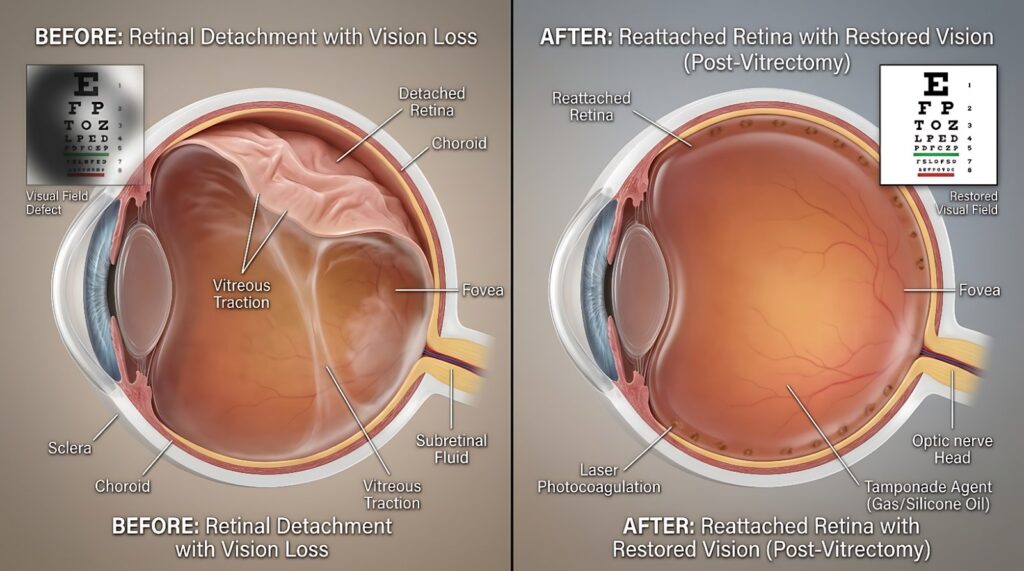
What is Vitrectomy?
Vitrectomy is a type of eye surgery. Doctors use it to treat problems inside the eye, especially the retina and the clear gel called vitreous. During a vitrectomy, the surgeon removes the vitreous gel from the center of the eye. This procedure helps treat many eye conditions. For example, it can help with retinal detachment, bleeding, or infection. The primary keyword, vitrectomy, refers to this important surgery. According to the American Academy of Ophthalmology, vitrectomy is a common and safe eye surgery.
When is Vitrectomy Needed?
Doctors may suggest vitrectomy for several reasons. Often, it is needed when the retina is damaged or the vitreous gel is cloudy. Some common reasons include:
Sometimes, symptoms like sudden vision loss, floaters, or blurry vision may lead your doctor to suggest a vitrectomy. Early diagnosis and treatment can help protect your vision.
How is Vitrectomy Performed?
Vitrectomy is usually done in a hospital or eye clinic. First, the doctor numbs your eye. Sometimes, you may get medicine to help you relax. Next, the surgeon makes tiny cuts in the white part of your eye. Through these cuts, special tools are used to remove the vitreous gel. Then, the doctor may fix the retina or remove scar tissue. In some cases, they may place a gas bubble or silicone oil inside the eye to help the retina heal. The whole vitrectomy procedure usually takes one to two hours. Most people go home the same day.
Benefits and Risks of Vitrectomy
Vitrectomy offers many benefits. For example, it can restore vision, stop further damage, and treat serious eye problems. However, like all surgeries, there are some risks. It is important to know both sides before making a decision.
Although most people do well, it is wise to discuss vitrectomy risks with your eye doctor. The World Health Organization and peer-reviewed journals agree that benefits often outweigh the risks for many patients.
Recovery and Aftercare
After vitrectomy, you will need some time to heal. Your doctor will give you special eye drops to prevent infection and reduce swelling. You may need to wear an eye patch for a short time. In some cases, you must keep your head in a certain position, especially if a gas bubble was used. Most people notice vision improvement within a few weeks. However, full recovery can take several months. It is important to follow your doctor’s instructions closely. Always attend follow-up visits to check your healing.
Tips for Eye Health After Vitrectomy
Good care after surgery helps prevent problems. Here are some helpful vitrectomy recovery tips:
Additionally, eating a healthy diet and not smoking can help your eyes heal. Regular eye check-ups are important for long-term eye health.
In summary, vitrectomy is a safe and effective eye surgery for many retinal problems. If you have symptoms or concerns, consult an eye specialist Dr. Shilajit Kar to learn if vitrectomy is right for you.